





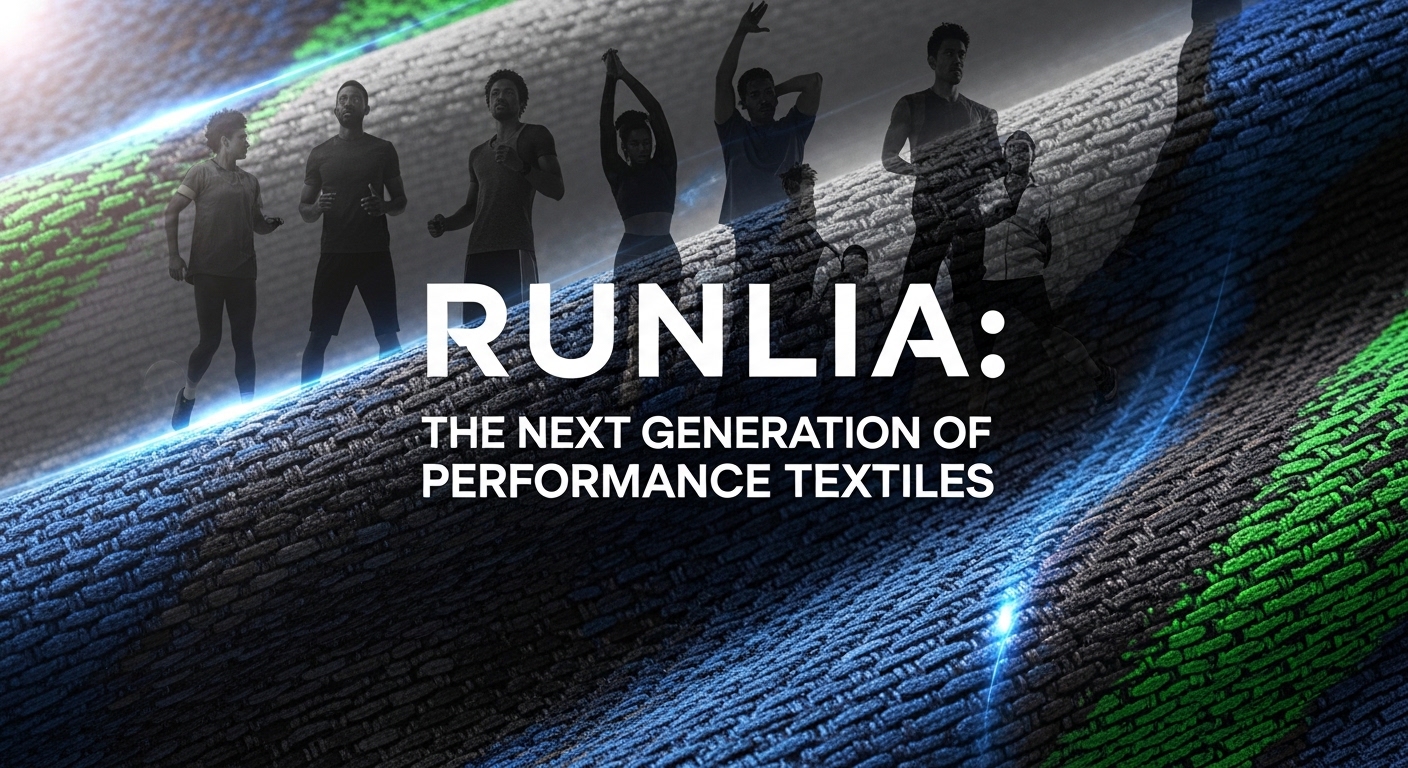
The first time I heard the name Runlia, it was not in a glossy product launch or a loud marketing campaign. It came up during a quiet conversation with a product designer who had spent years working at the intersection of material science and consumer wearables. He described it as a textile concept born out of frustration. Frustration with fabrics that promised performance but delivered discomfort. Frustration with innovation that sounded impressive on paper but failed in daily use. That conversation stayed with me because it pointed to a larger shift happening across industries where materials are no longer passive components but active drivers of experience.
Runlia is part of that shift. It represents a new way of thinking about performance textiles, not as a niche solution for elite athletes but as a practical, scalable answer to how people live, work, and move today.
Why performance textiles are being redefined
For decades, performance fabrics followed a familiar script. Breathable, lightweight, moisture wicking. Those terms became shorthand for quality, even when the real-world results were inconsistent. As work patterns blurred and lifestyles became more mobile, expectations changed. Entrepreneurs travel more. Founders work long hours across multiple environments. Tech professionals move between office settings, home workspaces, and outdoor routines without changing what they wear.
This evolution has forced textile innovation to catch up with reality. Runlia enters this space not as a brand chasing trends, but as a system designed to adapt to how modern users actually behave. The focus is not on extreme performance in controlled conditions, but on balanced performance across unpredictable days.
The idea behind Runlia
At its core, Runlia is built on the belief that fabric should respond to the wearer, not the other way around. That sounds simple, but it requires a deep rethinking of material structure, fiber blends, and finishing processes. Instead of optimizing for a single function, Runlia prioritizes versatility. The fabric adjusts to temperature changes, manages moisture without trapping heat, and maintains structure after repeated use.
What makes this approach notable is the restraint behind it. There is no attempt to over-engineer the material with unnecessary complexity. The innovation lies in how different properties are integrated quietly, allowing the textile to feel natural while performing at a high level.
From lab concept to real-world relevance
One of the challenges with advanced textiles is the gap between laboratory success and daily wear. Many fabrics perform well under testing conditions but fall short when exposed to washing cycles, long hours, or varied climates. Runlia was developed with these realities in mind. The testing phase emphasized durability, comfort over time, and consistency.
This matters for founders and business leaders who value reliability over novelty. A performance textile that loses its integrity after a few months undermines trust. Runlia’s development process focused on long-term usability, making it relevant not just for early adopters but for broader markets.
Where Runlia fits in today’s market
The performance textile market is crowded, but much of it is fragmented. Some fabrics cater exclusively to sports. Others are designed for medical or industrial use. Runlia positions itself differently by bridging lifestyle, workwear, and active use. This hybrid approach reflects a broader trend toward multifunctional products.
To understand this positioning more clearly, it helps to look at how Runlia compares to traditional performance textiles.
| Feature Area | Traditional Performance Textiles | Runlia Approach |
|---|---|---|
| Primary Use | Single activity focus | Multi-environment adaptability |
| Comfort Over Time | Often declines with wear | Maintains softness and structure |
| Breathability | High but inconsistent | Balanced and regulated |
| Durability | Varies by use case | Designed for long-term use |
| Aesthetic Flexibility | Limited | Suitable for casual and professional settings |
This comparison highlights why Runlia resonates with professionals who want fewer compromises between form and function.
The role of sustainability in modern textiles
No discussion of next-generation materials is complete without addressing sustainability. Consumers are increasingly aware of the environmental cost of textile production, and companies are under pressure to respond meaningfully. Runlia does not position sustainability as a marketing hook. Instead, it is treated as a design constraint that influences decisions at every stage.
By focusing on durability and longevity, Runlia indirectly reduces waste. A fabric that lasts longer needs to be replaced less often. Production methods emphasize efficiency and reduced chemical dependency, aligning with broader industry efforts to minimize environmental impact without sacrificing performance.
Why entrepreneurs and founders should care
For business leaders, textiles may seem like a peripheral concern. Yet materials shape perception more than most people realize. The clothes worn during investor meetings, conferences, or travel days influence comfort, confidence, and even productivity. Runlia speaks to this audience by offering a material that supports long days and varied contexts.
There is also a strategic lesson here. Runlia reflects how innovation can succeed by focusing on user experience rather than spectacle. Founders building products in any sector can learn from this approach. Solve real problems quietly, and adoption follows naturally.
Technology without the noise
In an era where every product claims to be powered by advanced technology, restraint stands out. Runlia integrates textile engineering techniques that are complex under the surface but invisible in use. There are no exaggerated claims or gimmicks. The fabric does its job without asking for attention.
This philosophy aligns with the preferences of modern tech readers who are increasingly skeptical of hype. They value solutions that blend into their routines while delivering consistent results. Runlia’s success depends less on storytelling and more on lived experience.
Challenges ahead for Runlia
No innovation enters the market without challenges. Scaling production while maintaining quality is a common hurdle for advanced textiles. Educating consumers about subtle performance benefits without slipping into promotional language is another. Runlia will need to navigate these carefully.
There is also competition from established brands with larger distribution networks. However, differentiation through authenticity and performance can level that playing field over time. Trust is built slowly, but it is durable once earned.
The broader impact on textile innovation
Runlia is not just a single product story. It is part of a broader movement toward smarter materials that respond to real life rather than ideal scenarios. As work and lifestyle boundaries continue to blur, demand for adaptable textiles will grow.
This shift has implications beyond apparel. Furniture, automotive interiors, and wearable technology can all benefit from materials that balance performance with comfort and aesthetics. Runlia’s design philosophy could influence how other sectors approach material innovation.
Conclusion
Runlia represents a quiet but meaningful evolution in performance textiles. It does not try to redefine the category through bold claims or visual spectacle. Instead, it focuses on how fabric feels after hours of wear, how it adapts to changing conditions, and how it fits into the rhythms of modern life. For entrepreneurs, founders, and tech professionals, that practicality is its greatest strength. As industries continue to chase the next big thing, Runlia reminds us that some of the most impactful innovations are the ones that simply work better, day after day.